


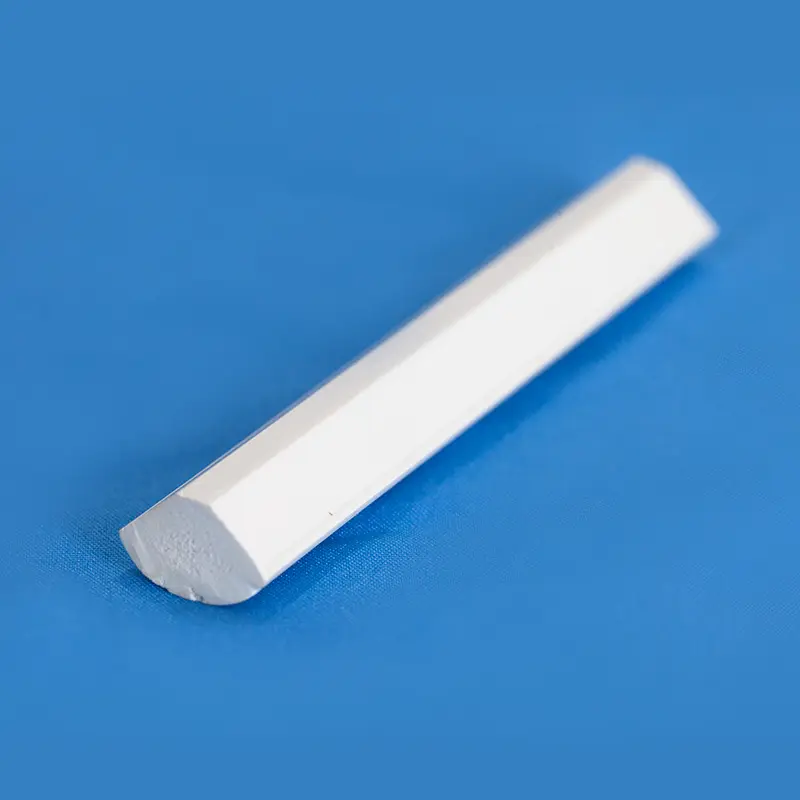


Tile Trim – Perfecting Tiled Surfaces with Professional Edge Solutions
1. What Is Tile Trim?
Tile Trim is a specialized trim made of high-quality polyvinyl chloride (PVC) material, featuring lightweight, corrosion resistance, moisture resistance, and easy installation. It is dedicated to the edge treatment of tiled surfaces (walls, floors, countertops), covering the exposed edges of tiles to solve the problem of rough cuts and enhance the overall finish of tiled areas. Suitable for kitchens, bathrooms, balconies, and other tiled spaces, it is an essential material for perfect tiling results.

2. Application Scenarios of Tile Trim in Construction
Tile trim covers all tiled areas in construction, providing comprehensive edge protection and decoration. Its key application scenarios include:
📍2.1 Floor Tile Edges
Floor tiles often have exposed edges at doorways, transitions between different flooring materials (e.g., tile and wood), and the edges of balconies or patios. These edges are easily stepped on, collided with, or worn, leading to chipping. Tile trim is installed on these edges to cover the rough cuts, form a smooth transition, and prevent wear and chipping. For example, at the junction of tile and wooden flooring, L-shaped or T-shaped tile trim can be used to bridge the height difference and create a seamless connection.

📍2.2 Wall Tile Edges
Wall tiles in kitchens, bathrooms, and backsplashes often have exposed edges at the top, around windows, or near countertops. These edges are not only unsightly but also prone to water seepage and chipping. Tile trim is installed along these edges to cover the gaps between tiles and the wall, enhance the waterproof effect, and make the overall tiled wall look more neat and professional. For example, the top edge of bathroom wall tiles can be decorated with tile trim to prevent water from seeping into the wall and add a decorative touch.

📍2.3 Countertop & Backsplash Edges
Kitchen and bathroom countertops (especially tiled countertops) and backsplashes have edges that are easily stained and damaged by daily use. Tile trim is used to wrap these edges, forming a smooth, easy-to-clean surface that prevents water and dirt from accumulating in the gaps, while also enhancing the overall aesthetics of the countertop and backsplash. U-shaped tile trim is particularly suitable for this scenario, as it wraps around the tile edge to provide comprehensive protection.

📍2.4 Curved Tiled Surfaces
For curved tiled surfaces such as swimming pools, circular sinks, or curved wall edges, flexible tile trim is used. It can be bent to fit the curve of the tiled surface, ensuring that the edge treatment is consistent with the curve, without gaps or wrinkles, and providing both protection and decorative effects. This type of trim is also resistant to corrosion and weather elements, making it suitable for outdoor or wet curved tiled areas.

3. Application Effects of Tile Trim
Using tile trim in tiling projects not only solves practical edge problems but also improves the overall quality and aesthetics of the tiled area. Its specific application effects are as follows:
4. Core Advantages of Tile Trim
Compared with traditional tile edge treatment methods (such as cement edging or metal trim), Pvc Tile Trim has obvious advantages, becoming the first choice for modern tiling projects:
4.1 Common Advantages with Other PVC Construction Materials
Lightweight & Easy to Install: PVC material is lightweight, which is convenient for transportation and construction. Installation does not require complex tools—just use adhesive, screws, or staples to fix the product in place. Self-adhesive PVC tile trim is even easier to install, requiring only peeling off the protective layer and sticking it to the desired surface.
Corrosion Resistance & Long Service Life: PVC is not prone to rust, rot, or corrosion, unlike metal (prone to rust) or wood (prone to rot and insect infestation). It can withstand the erosion of moisture, oil, and chemical substances, maintaining its performance and appearance for a long time.
Cost-Effective: The production cost of PVC materials is low, so the price of PVC tile trim is more affordable than metal or wood trim. At the same time, its long service life and low maintenance costs further reduce the overall cost of the project.
Versatile & Customizable: Tile trim comes in various sizes, shapes, and colors, which can be customized according to the needs of the project. It can be matched with different decorative styles and different tiling scenarios, and can also be cut to the required length.
4.2 Unique Advantages of Tile Trim
Various Profile Options for Different Needs: Tile trim has a variety of profiles (L-shaped, U-shaped, T-shaped, round, beveled, etc.), which can meet the edge treatment needs of different tiled surfaces. For example, U-shaped trim is suitable for wrapping tile edges, L-shaped trim is suitable for Corner transitions, and T-shaped trim is suitable for floor transitions. This versatility makes it applicable to various tiled scenarios.
Slip-Resistant Design: Some tile trims (especially those used for floor edges and stairs) have a slip-resistant surface, which can improve the safety of the space, preventing people from slipping on smooth tile edges. This is particularly important for families with children and the elderly, as well as public spaces such as hospitals and kindergartens.
Color Matching with Tiles: Tile trim is available in a variety of colors (such as white, gray, black, and wood grain) that can be perfectly matched with different types of tiles. Some manufacturers even offer custom color services to ensure that the trim blends seamlessly with the tile surface, enhancing the overall decorative effect. For example, wood-grain PVC tile trim can be matched with wood-grain tiles to create a consistent look.
5. Shape Selection Guide for Tile Trim
The key to maximizing the effect of tile trim is to choose the right profile according to the tile edge type, functional needs, and decorative style. Common shapes and their selection criteria are as follows:
5.1 L-Shaped Tile Trim
Shape Characteristics: Two perpendicular sides forming an L-shape, one side attached to the tile surface, and the other side covering the tile edge. It is available in both straight and curved designs.
Suitable Scenarios: The most common tile trim shape, suitable for the external corners of tiled walls and floors (such as the corners of bathroom walls, kitchen backsplashes, and balcony edges). It can also be used for the transition between tiled walls and other materials (such as tile and wood). For example, the external corner of a bathroom wall can use L-shaped tile trim to protect the tile edge and create a neat corner line.
Selection Tips: Choose the length of the two sides according to the thickness of the tile (usually 8mm-15mm, matching the tile thickness). For floor corners, choose a thicker and more impact-resistant L-shaped trim; for wall corners, choose a thinner and more decorative one. For curved corners, choose flexible L-shaped trim.

5.2 U-Shaped Tile Trim
Shape Characteristics: A U-shaped profile, with two sides wrapping the tile edge and a bottom attached to the tile surface. It has a closed structure, providing comprehensive protection for the tile edge.
Suitable Scenarios: Suitable for the exposed edges of floor tiles, countertop tiles, and backsplash tiles (such as the top edge of bathroom wall tiles, the edge of kitchen countertops, and the edge of balcony floor tiles). It can completely wrap the tile edge, preventing water and dirt from entering the gap and protecting the tile from chipping.
Selection Tips: Choose the inner width of the U-shape according to the thickness of the tile (ensuring the tile edge can be perfectly inserted). For countertop edges, choose a U-shaped trim with a slip-resistant surface; for wet areas, choose one with enhanced waterproof performance. It is also suitable for tiles with beveled or angled edges.

5.3 T-Shaped Tile Trim
Shape Characteristics: A T-shaped profile, with the horizontal side covering the seam between two tiles or two different flooring materials, and the vertical side attached to the surface.
Suitable Scenarios: Suitable for the transition between two floor tiles of the same height, or between tile and other flooring materials (such as tile and wood, tile and carpet). It can cover the seam between the two materials, creating a smooth transition and preventing dirt from accumulating in the seam. For example, the transition between the living room tile and the bedroom wooden floor can use T-shaped tile trim.
Selection Tips: Choose the height of the vertical side according to the thickness of the flooring material (ensuring it is flush with the surface of the flooring). For high-traffic areas, choose a T-shaped trim with a wear-resistant surface. It is also suitable for large-area floor tile seams that require a neat finish.

5.4 Round Tile Trim
Shape Characteristics: The edge is rounded, with a smooth and soft surface, similar to the bullnose corner bead, but designed specifically for tile edges.
Suitable Scenarios: Suitable for spaces that require safety and softness, such as children's rooms, bathrooms, and hospitals. It can also be used in residential spaces to soften the sharp edges of tiles, creating a warm and comfortable atmosphere. It is particularly suitable for traditional and decorative styles, and can be used for both wall and floor tile edges.
Selection Tips: Choose the radius of the rounded edge according to the decorative style—smaller radius for modern styles, larger radius for traditional styles. Ensure the rounded surface is smooth to avoid affecting the overall aesthetic effect. It is also suitable for curved tiled surfaces such as circular sinks or archways.

Conclusion: Tile Trim – The Key to Perfect Tiled Surfaces
Tile trim is an essential auxiliary material for tiling projects, which can not only protect tile edges and prevent damage but also improve the overall aesthetics and practicality of the tiled area. By choosing the right profile according to the tiling scenario, functional needs, and decorative style, you can achieve a professional, neat, and long-lasting tiling effect. Whether it is a residential kitchen, bathroom, or commercial tiled space, our high-quality PVC tile trim can meet your needs, providing you with professional tile edge solutions.